

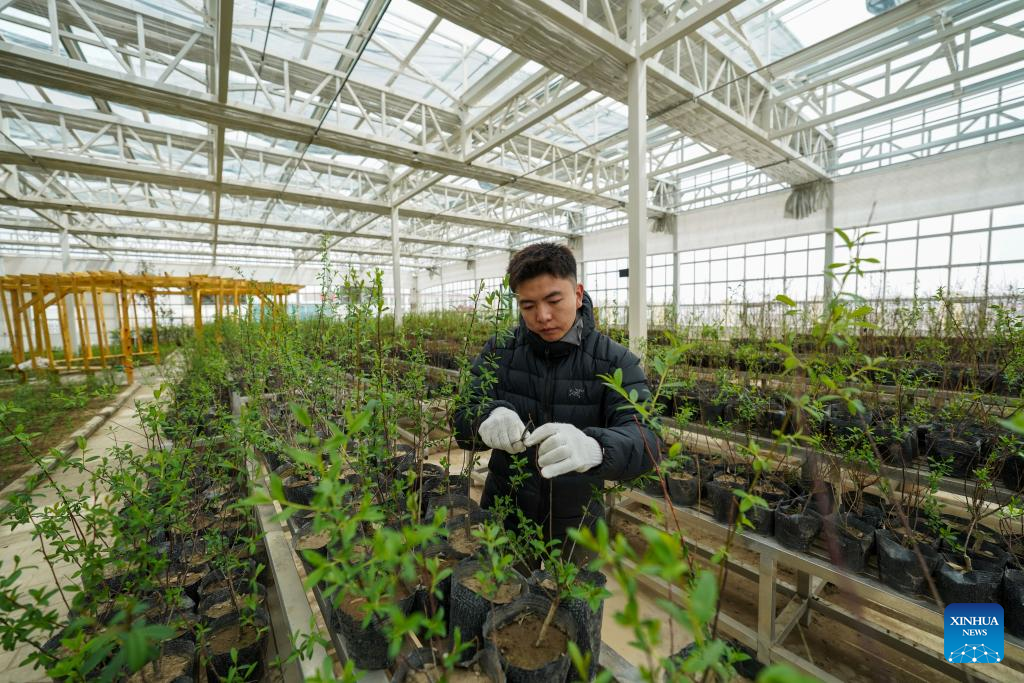
A staff member trims saplings at a tree cultivation base in Nagqu, southwest China’s Xizang Autonomous Region, April 25, 2025. Nagqu City has an average altitude of 4,500 meters. Due to the unfavorable conditions for tree growth, such as permafrost, low temperature, frequent strong wind throughout the year, it was once the only prefecture-level city in China without trees used for urban greening.
In 1998, people of Nagqu started the trial of planting trees. After more than 20 years of continuous practice, Nagqu has gradually established a trial planting system, with trees of many varieties being planted in the city. (Xinhua/Jigme Dorje)
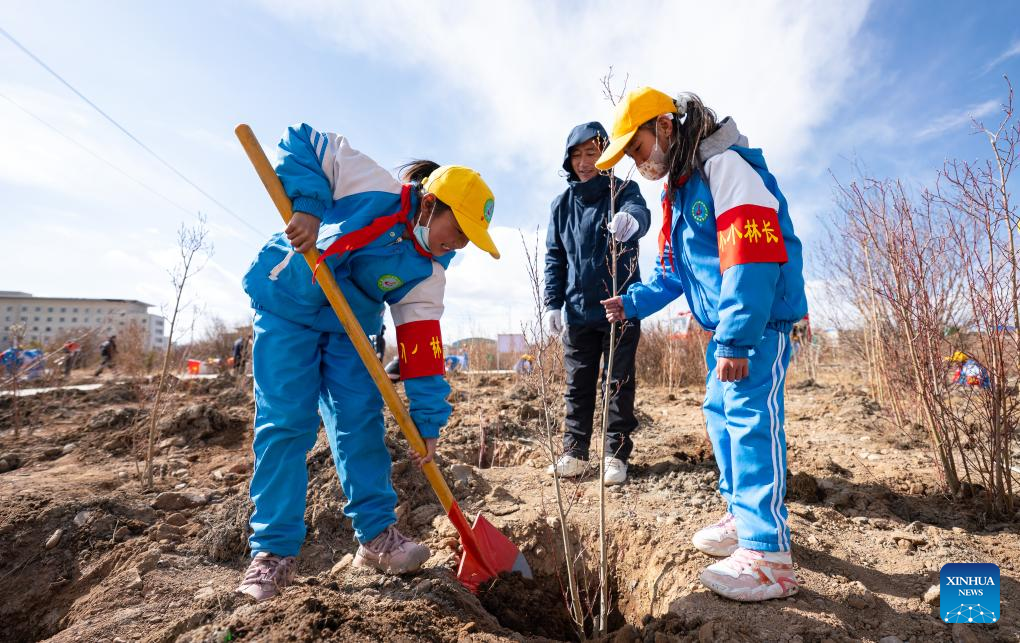
Students take part in a voluntary tree-planting activity in Nagqu, southwest China’s Xizang Autonomous Region, April 25, 2025. Nagqu City has an average altitude of 4,500 meters. Due to the unfavorable conditions for tree growth, such as permafrost, low temperature, frequent strong wind throughout the year, it was once the only prefecture-level city in China without trees used for urban greening.
In 1998, people of Nagqu started the trial of planting trees. After more than 20 years of continuous practice, Nagqu has gradually established a trial planting system, with trees of many varieties being planted in the city. (Xinhua/Tenzin Nyida)
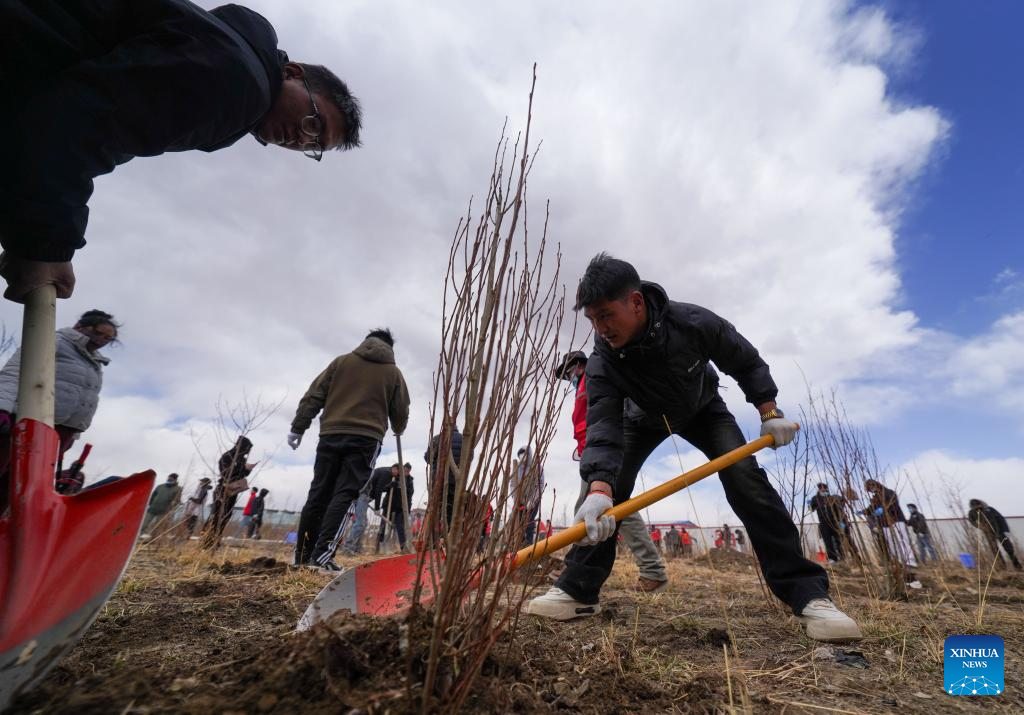
People take part in a voluntary tree-planting activity in Nagqu, southwest China’s Xizang Autonomous Region, April 25, 2025. Nagqu City has an average altitude of 4,500 meters. Due to the unfavorable conditions for tree growth, such as permafrost, low temperature, frequent strong wind throughout the year, it was once the only prefecture-level city in China without trees used for urban greening.
In 1998, people of Nagqu started the trial of planting trees. After more than 20 years of continuous practice, Nagqu has gradually established a trial planting system, with trees of many varieties being planted in the city. (Xinhua/Jigme Dorje)
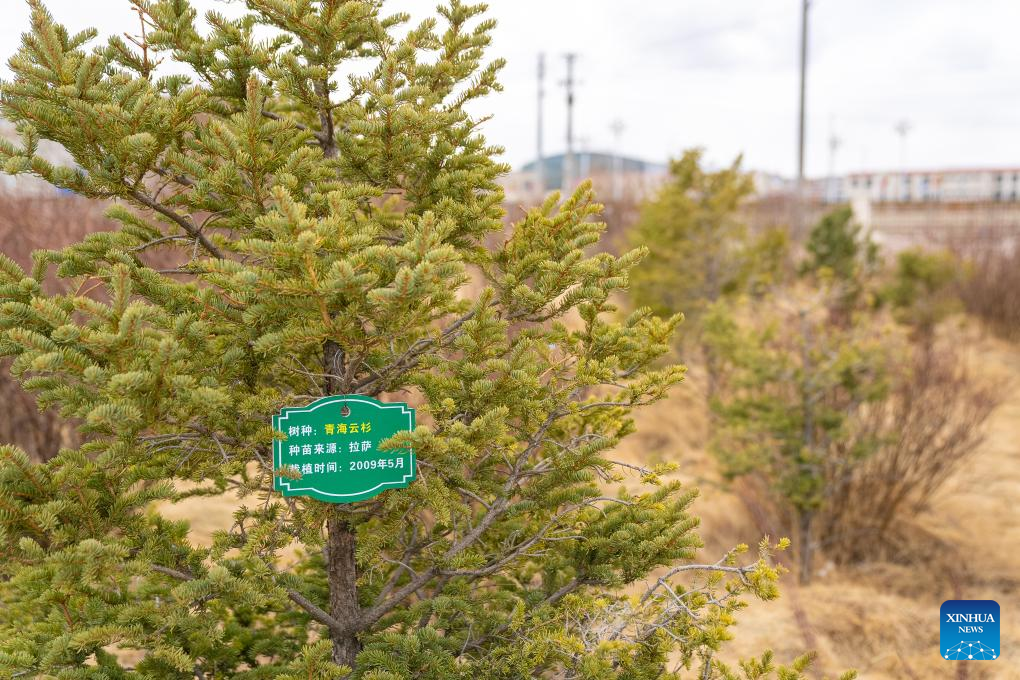
This photo taken on April 25, 2025 shows a trial base for tree planting in Nagqu, southwest China’s Xizang Autonomous Region, April 25, 2025. Nagqu City has an average altitude of 4,500 meters. Due to the unfavorable conditions for tree growth, such as permafrost, low temperature, frequent strong wind throughout the year, it was once the only prefecture-level city in China without trees used for urban greening.
In 1998, people of Nagqu started the trial of planting trees. After more than 20 years of continuous practice, Nagqu has gradually established a trial planting system, with trees of many varieties being planted in the city. (Xinhua/Tenzin Nyida)
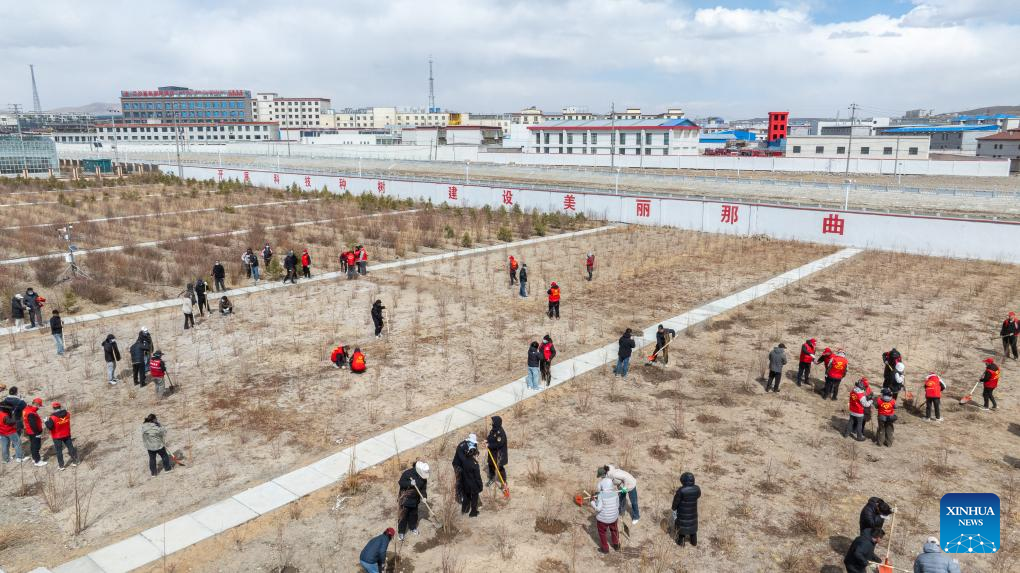
This drone photo shows people taking part in a voluntary tree-planting activity in Nagqu, southwest China’s Xizang Autonomous Region, April 25, 2025. Nagqu City has an average altitude of 4,500 meters. Due to the unfavorable conditions for tree growth, such as permafrost, low temperature, frequent strong wind throughout the year, it was once the only prefecture-level city in China without trees used for urban greening.
In 1998, people of Nagqu started the trial of planting trees. After more than 20 years of continuous practice, Nagqu has gradually established a trial planting system, with trees of many varieties being planted in the city. (Xinhua/Tenzin Nyida)
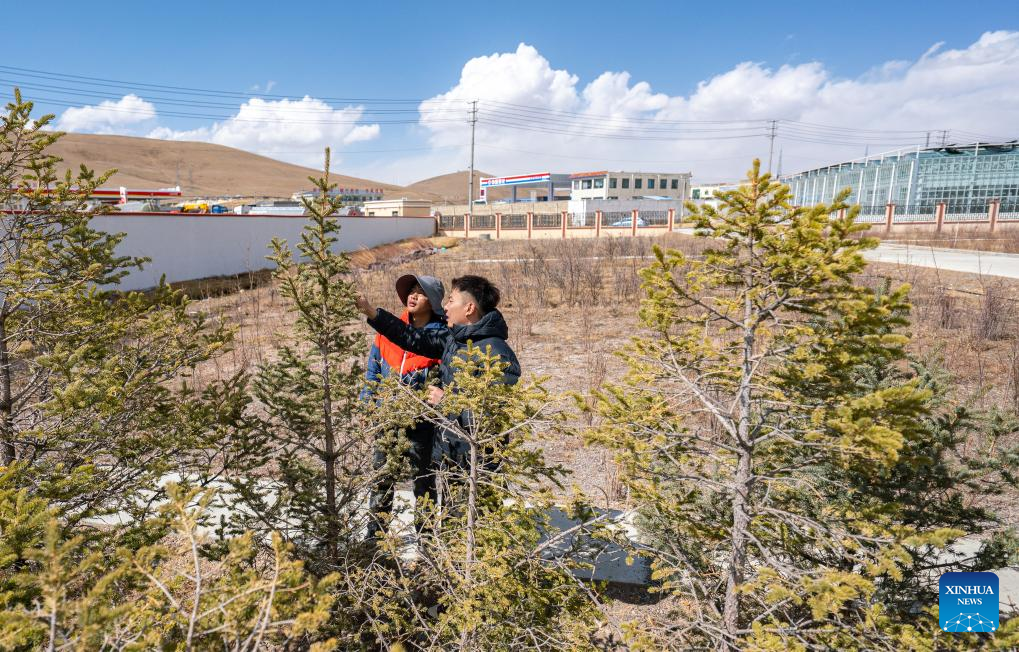
Staff members inspect the growth of trees in Nagqu, southwest China’s Xizang Autonomous Region, April 25, 2025. Nagqu City has an average altitude of 4,500 meters. Due to the unfavorable conditions for tree growth, such as permafrost, low temperature, frequent strong wind throughout the year, it was once the only prefecture-level city in China without trees used for urban greening.
In 1998, people of Nagqu started the trial of planting trees. After more than 20 years of continuous practice, Nagqu has gradually established a trial planting system, with trees of many varieties being planted in the city. (Xinhua/Tenzin Nyida)
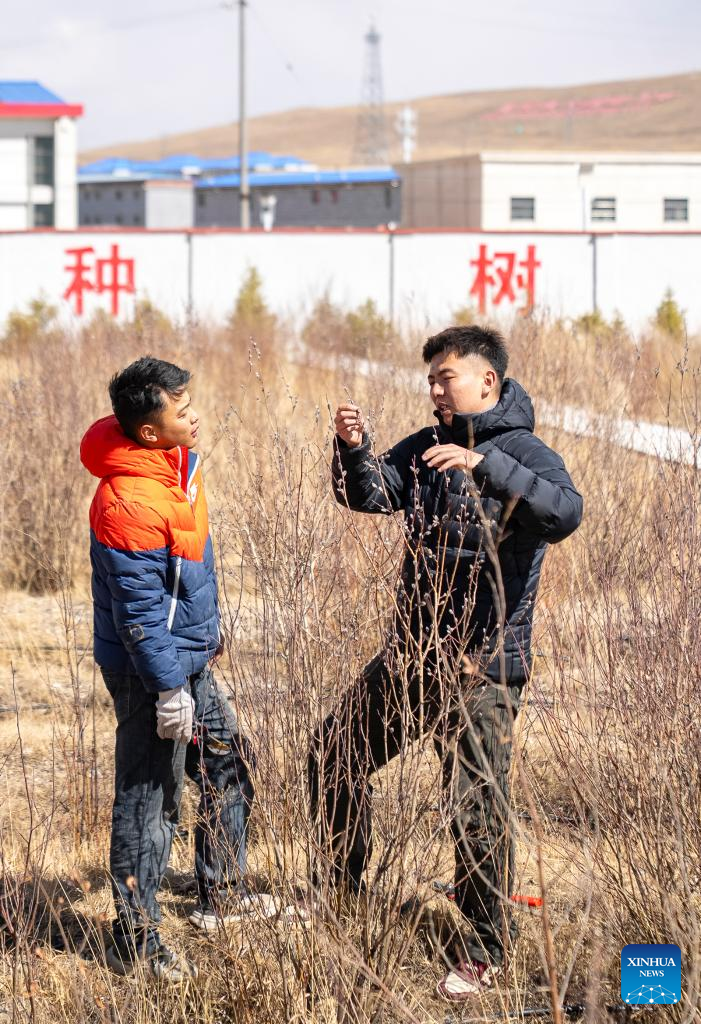
Staff members inspect the growth of saplings in Nagqu, southwest China’s Xizang Autonomous Region, April 25, 2025. Nagqu City has an average altitude of 4,500 meters. Due to the unfavorable conditions for tree growth, such as permafrost, low temperature, frequent strong wind throughout the year, it was once the only prefecture-level city in China without trees used for urban greening.
In 1998, people of Nagqu started the trial of planting trees. After more than 20 years of continuous practice, Nagqu has gradually established a trial planting system, with trees of many varieties being planted in the city. (Xinhua/Tenzin Nyida)
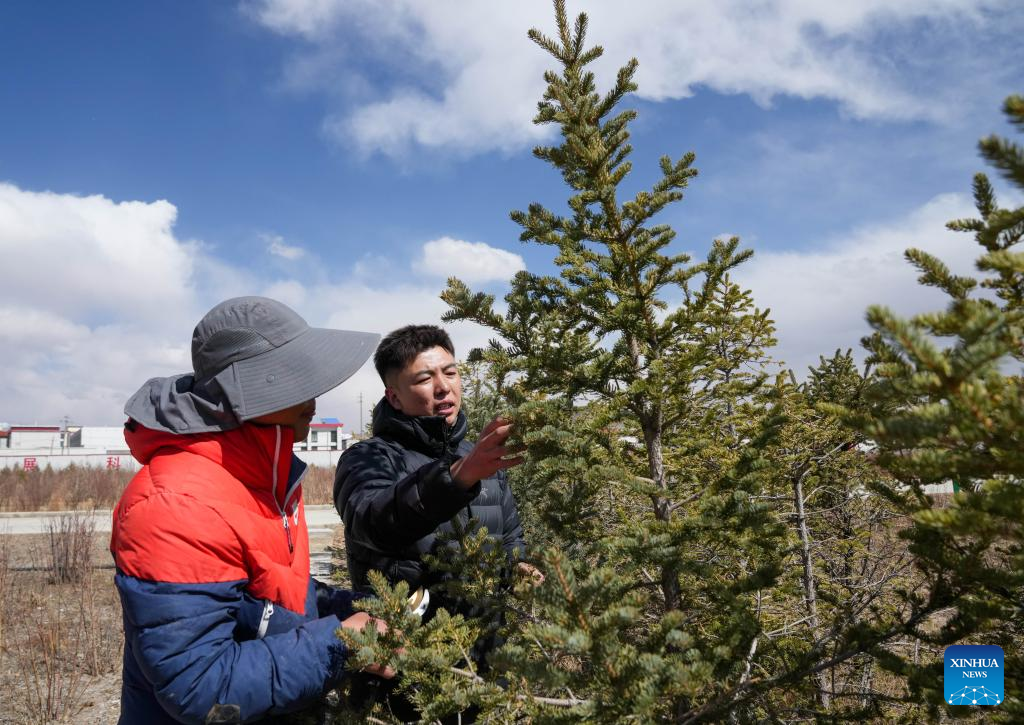
Staff members inspect the growth of trees in Nagqu, southwest China’s Xizang Autonomous Region, April 25, 2025. Nagqu City has an average altitude of 4,500 meters. Due to the unfavorable conditions for tree growth, such as permafrost, low temperature, frequent strong wind throughout the year, it was once the only prefecture-level city in China without trees used for urban greening.
In 1998, people of Nagqu started the trial of planting trees. After more than 20 years of continuous practice, Nagqu has gradually established a trial planting system, with trees of many varieties being planted in the city. (Xinhua/Jigme Dorje)
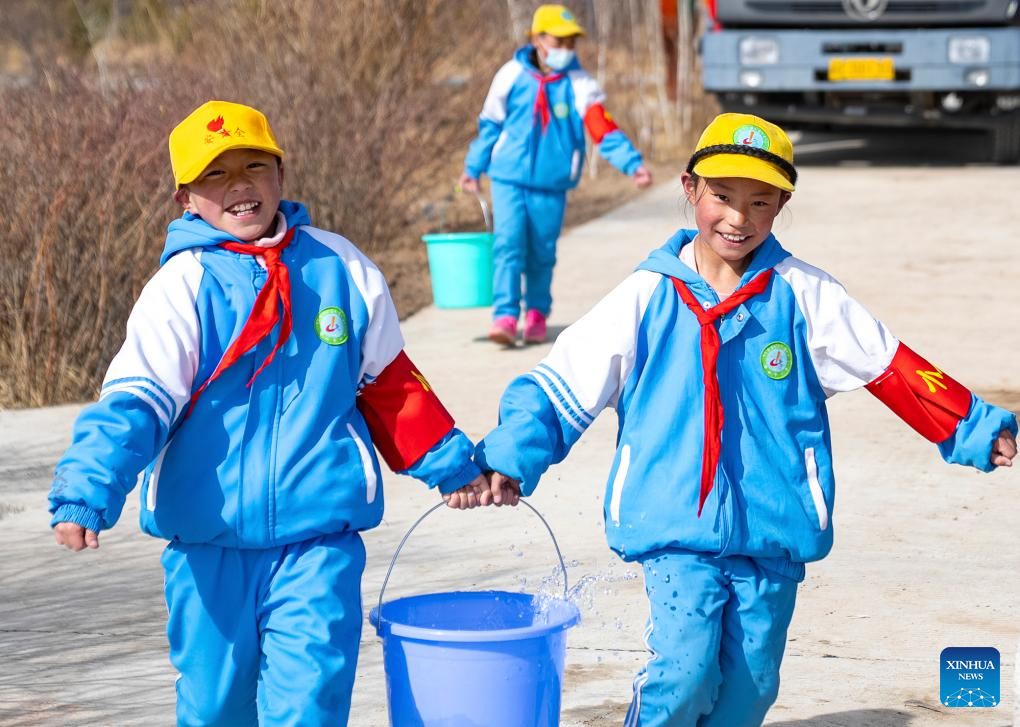
Students take part in a voluntary tree-planting activity in Nagqu, southwest China’s Xizang Autonomous Region, April 25, 2025. Nagqu City has an average altitude of 4,500 meters. Due to the unfavorable conditions for tree growth, such as permafrost, low temperature, frequent strong wind throughout the year, it was once the only prefecture-level city in China without trees used for urban greening.
In 1998, people of Nagqu started the trial of planting trees. After more than 20 years of continuous practice, Nagqu has gradually established a trial planting system, with trees of many varieties being planted in the city. (Xinhua/Tenzin Nyida)


